Missionary Or Mercenary?

May 11th, 2013 Posted in INMED | No Comments »

Missionary Or MercenaryHigh in the mountains of Pakistan, Fatima’s chest heaved as she gasped for air. Was the cause pneumonia? Pulmonary embolism? Heart failure? James Fyffe, an American RN, scrambled to clarify her diagnosis. Simple labs and a chest X-ray provided little clarity. No CAT scan or blood gas analysis available out there. James provided her basic oxygen and an antibiotic, but no option of prolonged ventilator support. On hearing James account I questioned him, “Why would you choose to volunteer under such austere conditions in remote, frigid Pakistan?” His response: “For me, it comes down to this, would I rather be a missionary or a mercenary?”

At the INMED Exploring Medical Missions Conference James met John Condie, a general surgeon, and his wife, Angela, a pediatrician, both on staff at Pakistan’s Bach Christian Hospital. James became intrigued at their invitation. “Mercenaries,” explains James, “are those who travel primarily for the benefit it brings them. Healthcare people often act like mercenaries, primarily looking for adventure, procedure opportunities, ‘great cases,’ and enhancement of their reputation. Missionaries in the best sense, by contrast, are motivated by compassion and focused on the mission to benefit those whom they serve.”

Why Pakistan?

“For two years I lived and served in El Salvador. But I was only one among thousands of volunteers to Central America. The needs in Pakistan are infinitely greater, and so very few are willing to serve there. Christ has called me to be a light to the nations. Why would I choose to shine where thousands of lamps are already glowing?”

Isn’t Pakistan dangerous?

“I never felt threatened. There were no terrorist events in Pakistan during my stay, and Pakistan’s last school shooting was 10 years ago. Meanwhile, while I was away in Pakistan, America witnessed the Boston Marathon bombing, and repeated school shootings.”

What’s the greatest challenge?

“Some Pakistanis look at life through lenses I found hard to understand. Fatima, the woman with respiratory distress, died that night. Rather than be distraught over the loss, her family was resigned that her death was inevitable. I have much to learn about their culture. And yet I also know that like us they desire peace and compassion.”

Can you really make any difference?

“A little compassion goes a long way - like a light illuminating a dark hill. It’s not just about the people whom you touch directly, but also those who become inspired by your example.”

Do you aspire to be a missionary or mercenary? Please join James Fyffe for his plenary exploration of this question at the INMED Exploring Medical Missions Conference on May 31 and June 1.

Test Your Skills: Three Case Study Questions

April 15th, 2013 Posted in INMED | No Comments »

Test Your SkillsThe INMED Exploring Medical Missions Conference on May 31-June 1, will present you the chance to test your skills to the extreme. This event will include Tropical Medicine Rounds: A simulation of patient care in a resource-poor hospital with scenarios like the following three case study questions. Would you be able to pass an examination on these cases?

1. You are volunteering at a safety net clinic in Oklahoma City and seeing Erasto - a sixteen-year old refugee newly arrived from Somalia. He has cough, weight loss, poor appetite and vague but increasing abdominal pain. On questioning you learn that in his Somali home safe drinking water is a luxury and sanitation is in disarray. On exam Erasto has an oral temperature of 38.8, respirations of 30, and capillary refill time of 5 seconds. His abdomen is tense and diffusely tender. You are considering the possibility of typhoid fever. Which ONE of the following statements about typhoid fever is TRUE?

A. Salmonella typhi is transmitted by ingestion of contaminated food or water.
B. Typhoid fever almost always causes diarrhea.
C. Typhoid fever commonly presents as an acute illness.
D. Typhoid vaccination is quite effective.
E. Typhoid fever can be readily differentiated on clinical examination from other infectious diseases, such as mononucleosis and infectious hepatitis.

Carefully consider before selecting your answer. The correct response is A. Although typhoid fever does not frequently cause diarrhea, it shares many of the risk factors associated with diarrheal diseases and is usually transmitted by fecal-oral ingestion of contaminated food or water. Typhoid should be considered in persons with non-acute, persistent, unexplained fever and GI symptoms, especially diarrhea and abdominal pain. Diagnosis is often challenging. The differential diagnosis includes malaria, infectious hepatitis, enteric fever syndrome (due to Yersinia enterocolitica, Y. pseudotuberculosis, or Campylobacter), atypical pneumonia, mononucleosis, bacterial endocarditis, tuberculosis, and brucellosis. Common complications include intestinal hemorrhage and perforation, with osteomyelitis and endocarditis occurring less commonly. Typhoid vaccination is available, but it is of marginal effectiveness.

2. You are in Jordan caring for Anas, a 2-year-old child whose family just escaped the blood shed in Syria. Anas is alert, temperature is 38 degrees C, respirations are 30 per minute, pulse is 90 bpm, and blood pressure is unobtainable. He has extreme muscle wasting throughout, reddish hair discoloration, and loss of adipose tissue with no peripheral edema. Your first priority in managing this child with acute protein-energy malnutrition (PEM) is which ONE of the following:

A  Treatment of coexisting medical illnesses
B  Provision of high-concentration protein supplement
C  Administration of micronutrient supplements
D  Immediate refeeding
E  Correction of hydration and acid-base alterations

The appropriate answer to this question may not be the most intuitive. The correct answer is E. The management of acute protein-energy malnutrition (PEM) can be separated into two stages. The first stage is stabilization: to immediately correct hydration and acid-base alterations. The second stage is refeeding. This can begin as soon as medical problems are reasonably stable and rehydration is complete. It may be necessary to begin initial refeeding slowly in persons who have advanced PEM or kwashiorkor because of damage to the intestinal mucosa. During the period of renutrition, micronutrient supplements and attention to any coexisting medical illnesses may also be indicated.

3. You are in Cambodia seeing Solyna, a twentyone-year old lady, who suddenly developed fever, vomiting, severe headache, and pain on moving her eyes. On physical examination you note that Solyna is lethargic, has generalized lymph node enlargement and a slow heart rate relative to her fever of 39 degrees. Your initial differential diagnosis is broad: influenza, dengue, typhoid fever, mononucleosis, malaria.  You Giemsa stain her blood smears but you do not identify any ring-like Plasmodium parasites that would suggest malaria. You initiate intravenous fluids and antipyretics. Over the next hours Solyna develops hypothermia, severe abdominal pain, decreased mental status, and bleeding from her gums and nose. You now suspect dengue - an arbovirus infection. Which ONE of the following is a characteristic of severe dengue fever?

A  Leukocytosis with increased band forms
B  Increased urinary output
C  Abnormal vascular permeability with spontaneous bleeding
D  Predictable improvement in response to gamma globulin infusion
E  Decreasing hematocrit

This case requires careful attention to detail in the history and physical exa. The correct answer is C. Key criteria for diagnosis of severe dengue fever are abnormal vascular permeability with spontaneous bleeding, fever, and low platelet count. Leukopenia (low white blood cell count), increasing hematocrit, and decreased urinary output commonly accompany severe dengue fever. Gamma globulin is of no therapeutic benefit.

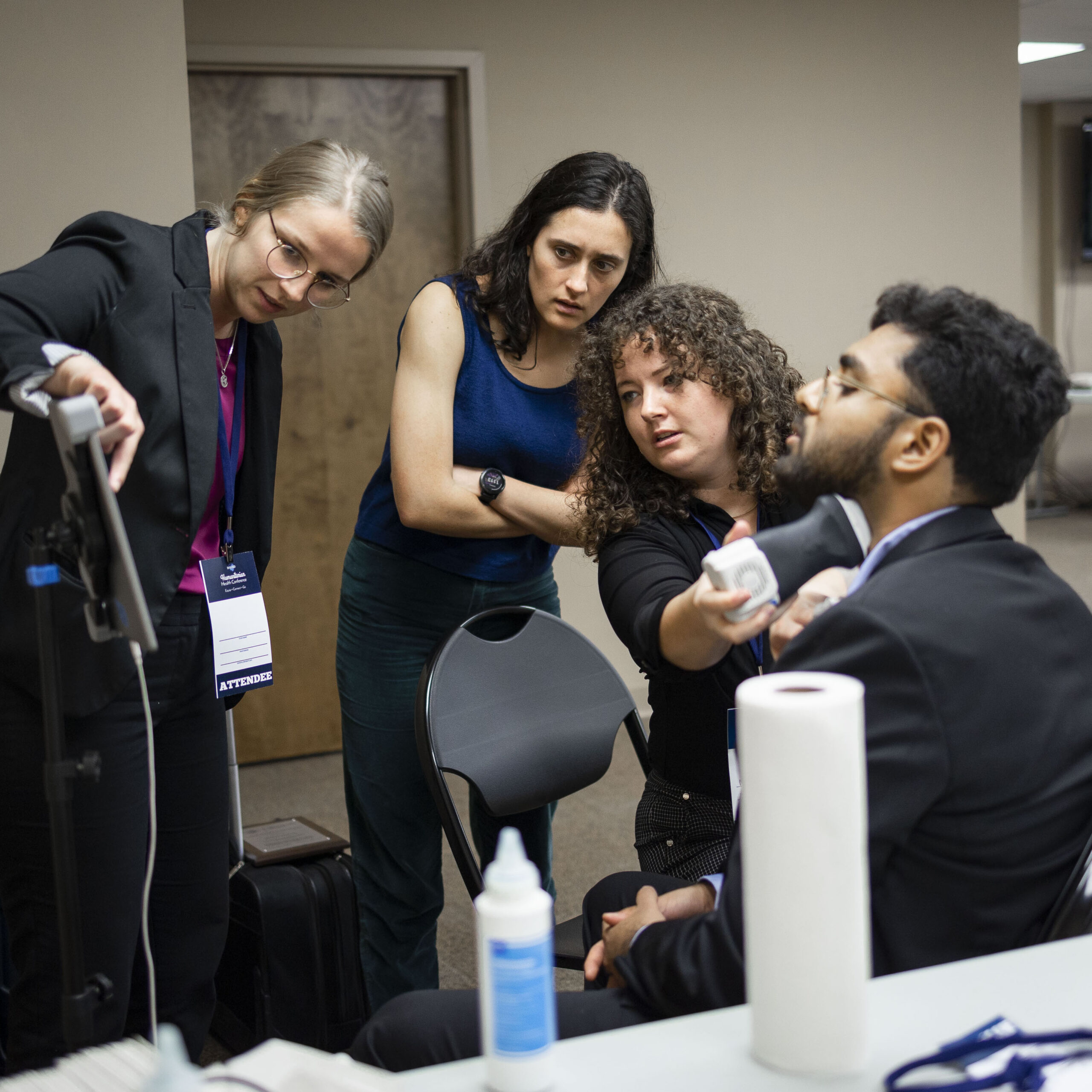
The INMED Exploring Medical Missions Conference on May 31-June 1, will both test and polish your skills through a simulation of tropical medicine rounds and crisis response, and workshops on basic suturing, wound care, management of obstetrical complication, newborn resuscitation, and strategies for malnutrition recovery. To provide quality medical care with few resources in communities disabled by poverty is the most extreme test of clinical skills. How would you rate in such a situation?

ARGO, INMED and the Academy Awards

March 10th, 2013 Posted in INMED | No Comments »

argo_inmed_academy_awards_banner530.jpgIran is “an island of stability in one of the more troubled areas of the world,” said President Jimmy Carter in 1977. Yet in 1979 Iran broiled over into a bitter revolution that killed over a million citizens. It also provoked the capture of 52 American hostages held at the United States embassy for 444 days. Given the courage, chaos, and conviction surrounding that bitter spectacle, is it any wonder that the film ARGO was selected as this year’s Academy Awards Best Picture?

Iranians revolutionary agents also arrested, imprisoned, and executed more moderate Muslims in their midst. The six Americans portrayed in ARGO were not the only ones to escape this blood bath. Among them was the sophisticated, educated, David Nasser, whose family fearing for their safety determined to flee the nation.

Young David Nasser lived a year in exile before entering life as a foreigner in a vastly different culture - the American South. Mercilessly taunted, this terrified teen experienced both the destructive power of religion and the trauma of extraordinary prejudice. Inspired by a compelling search for security, David Nasser discovered that enduring peace and self-worth are only to be found in a personal relationship with the Messiah.

His first book, A Call To Die, is a bestseller that focuses on being honest with God, denying our desires, and serving the Creator through serving one another. Today, David Nasser addresses audiences of 700,000 people each year, presenting a call to faith and an appeal for genuine action across cultures on behalf of our world’s most distressed people.

Would you like to hear David Nasser’s personal account? INMED is honored to invite you to the Exploring Medical Missions Conference on May 31-June 1, where he will give the keynote address. You may discover, as David Nasser did, a far more compelling “island of stability in one of the more troubled areas of the world.”

Should You Volunteer In Haiti?

February 10th, 2013 Posted in INMED | No Comments »

Should You Volunteer In Haiti?Haiti is the poorest nation in the Western World despite being just a one-hour flight away from Florida. Thousands of American healthcare personnel venture to volunteer in   Haiti each year. Should YOU be one of them? Let’s explore your questions with Jim and Sandy Wilkins of Haiti Health Ministries…

Q: “Can I give any substantial help in just a few days or weeks?”

A: “Yes. Short-term volunteers relieve some of the load off of we who work here year-round. You may also discover a calling toward heart-felt commitment. We first came to the island as volunteers for a few days in 1995. A vision was cast on that trip, and now we’ve been living in Haiti fourteen years.”

Q: “Can I assist even though I have no healthcare skills?”

A: “Yes, we need both healthcare and non-healthcare volunteers. The latter can help us through rebuilding our clinic destroyed in the earthquake, and through such services as sewing and painting. Healthcare people do well to realize that there is much to learn about how to provide care in the particular context of Haiti, especially amid limited pharmaceutical and laboratory support, as well as vastly different cultural ideas of health and disease.”

Q: “Do I need to speak Creole or French?”

A: “No. We arrange interpreters for our volunteers. Haitians speak their native Creole language in daily conversation. Few speak French, and rarely English or Spanish. Volunteers soon discover that translation is slow and often cumbersome. They often say, ‘I wish I could speak Creole,’ and then endeavor to learn.”

Q: “What’s the risk I will be threatened?”

A: “Robberies, rapes, and kidnappings do take place and are a statistical risk, just as they are in the US. However this risk can be minimized by cooperating with reputable organizations in Haiti, traveling in groups during daylight hours in safe areas, and by heeding the advice of local persons. Medical liability is also a theoretical risk, but in reality we’ve never heard of a lawsuit except Americans in Haiti suing other Americans. Most people, by contrast, will be extremely grateful for your service.”

Q: “Must I have a specific faith to volunteer?”

A: “No, we welcome people of all faiths as volunteers. We have a code of conduct that we require everyone to follow. We will also encourage you to attend a Haitian church service with us on Sunday morning and a weekday evening Bible group. These are important Haitian cultural as well as spiritual experiences. We respect those with other beliefs and would never demean them, but we are not ashamed of the good news that Jesus came to save us from our sins. It’s natural for us to share this with Haitians and Americans alike.”

Would you like to volunteer in Haiti or in another low-resource nation? INMED cooperates with Haiti Health Ministries as well as Medical and Public Health sites in forty locations around the globe. We will assist you with the logistics and particular skills you will need to acquire. And like Jim and Sandy Wilkins, you may also discover not simply a remarkable experience but a calling toward heart-felt commitment.

Will THESE Lives Be Saved?

January 15th, 2013 Posted in INMED | No Comments »

Will THESE Lives Be Saved?Zhangyi suffers from atherosclerosis blocking blood flow to her legs. Just taking a few steps brings on excruciating pain signaling near death of her toes and feet. But being retired and in residential care, transportation issues limit Zhangyi access to medical consultation.

Wanghui is a six-month old orphan, body critically thin, and with a chronic rash covering her cheeks. Taken in to custodial care, the facility would like to transfer Wanghui to a foster family, where her nutrition would likely thrive. But her rash dissuades potential parents.

Liuhong has weeping, green mucus running from both eyes, progressively losing his sight. But as a factory worker in the countryside, skilled eye care is only a distant possibility.

Should these lives be saved? Certainly. But will these lives be saved? Here enters the volitional element. In a world of limited resources the only unlimited one is our capacity for compassion and innovation. The LIGHT health team of Shenyang, China is exemplary for moving principle into practice. On location, I marvel at LIGHT in action: Zhangyi received her medical consultation right at the retirement center. Wanghui’s rash was successfully treated inside custodial care, clearing the way for a foster family. Liuhong’s vision was restored far out in the countryside clinic.

Ultimately, it is individuals and small organizations that provide actual care to people on the margins. Wouldn’t you like to complement their mission? INMED can organize a service-learning opportunity with LIGHT or at another of our Training Sites in twenty-five nations.

Will people’s lives be saved? Your personal actions of compassion and innovation will make it so.

An Unbearable Suffering

January 4th, 2013 Posted in INMED | No Comments »

Countryside ClinicNov 14 to Dec 14 I was again in Shenyang, northeastern China working alongside my colleagues at LIGHT - Liaoning International General Health Trainers. This is a full-time team of Chinese healthcare personnel providing care to the most vulnerable people of this enormous city.

One memorable day the I drove with the LIGHT team to the countryside. Twice each month LIGHT holds clinic here. It was bitterly cold when we arrived. But still some sixty townspeople were waiting. As I was examining an elder woman her companion asked 他们为什么在这里 (”Why are they here?”). She replied 因为真正的神爱我们 (”Because one the true God loves us”).

Another day we did clinic at a very humble retirement center – a bittersweet experience. Generally the only people who are relegated to retirement centers are those who are penniless or who have no children who care for them. Yet these precious elders were radiant and enthusiastic to receive us. The headmaster immediately lead me to a room of bed-bound people, mostly hemiplegics, who were covered with scabies. In my presence they were scratching vigorously, causing me to recall how horribly I scratched from this infection when I was twenty-two. Our only medication for scabies was little tubes of sulfur - a remedy that is hardly sufficient. While I continue to feel anguish for these people, my heart is also warmed by the thought of such care and concerned expressed to them by the people of LIGHT.

A Call To Die

November 27th, 2012 Posted in INMED | No Comments »

A Call To Die BannerBorn with his intestines lying outside his abdomen, death was imminent for a baby in West Africa. His grandmother gathered up the newborn, scrambling with hope that someone could save her grandson. Lisa Mohrman, surgeon on watch at Ghana’s Baptist Medical Center, received the baby and in the operating room repaired his abdominal deformity. “A month later,” recounts Lisa, “his abdomen has healed, he’s gaining weight, and seems to be developing normally. I am glad that I was the one to touch this baby’s life.”

Lisa responded to a call, a call to die to herself – to her comforts, her entertainment, her material prosperity. She chooses to live simply, so that others may simply live. Coming to embody this virtue was a process for Lisa. “I was first inspired by the service of Dr. Tom Dooley to the underprivileged of Laos. INMED gave me the opportunity to explore this desire as a medical student through the International Medicine Certificate program at Banso Baptist Hospital in Cameroon. I spent the next 5 years of my surgical residency yearning to return to Africa.”

“Today, I am serving in Ghana as the INMED International Medicine Fellow.  Over the past months working at the hospital I have gained a new understanding of dying to myself. Working here can be overwhelming, with so many patients in need and so many that I cannot possibly help, no matter how great my desire is to make them well. But then I remember that I touched at least one little baby, a baby who is alive today in part because I am here.”

Dying to self. Living simply so that others may simply live. INMED is committed to enabling healthcare students and professionals to do just this.  Are you looking for inspiration or simply need to take the next step towards your calling? Join us at the annual Exploring Medical Missions Conference on May 31-June 1, 2013. Register today and be among those who discover that a call to die can actually mean living in the fullest.

Can You Treat This Child’s Respiratory Distress?

November 12th, 2012 Posted in INMED | No Comments »

Can You Treat This Child’s Respiratory Distress?You are volunteering in Honduras by providing vacation coverage for the clinicians whom you met at the INMED Exploring Medical Missions Conference. A young mother approaches your health center carrying a one-year old child. He is febrile and breathing rapidly with shallow chest excursions. You are alarmed to observe that his sputum is mixed with blood and his limbs are cyanotic.

You immediately call for oxygen to be administered, but learn that the tank is all but empty. You also request a chest X-ray, but find the technician has left for the day. You next consider initiating empiric therapy for pneumonia. Regarding pneumonia management in low-resource communities which ONE of the following statements is TRUE?

A  Most deaths from pneumonia occur in elderly persons.
B  Treatment against pneumonia should be immediate and based on observations regarding a cough, fever, respiratory rate and chest retractions.
C  H. influenzae and pneumoccal vaccines are routinely administered.
D  Treatment with an antibiotic must be initiated only after obtaining bacteriological cultures.
E  Upper respiratory tract infections also cause severe health consequences.

Consider carefully before you respond. The correct answer is B. Medical care providers of all levels, particularly community health workers, must be trained to appropriately diagnose and treat pneumonia based on observations regarding a cough, fever, respiratory rate and chest retractions. Delay should never be made for further testing. Deaths from pneumonia are most common among children age 1 to 4 years. H. influenzae and pneumoccal vaccines are not routinely administered in low-resource nations. With the exception of streptococcal pharyngitis and subsequent rheumatic fever, upper respiratory tract infections rarely cause severe health consequences.

You initiate therapy with ampicillin. The following day you find that the child’s respirations have slowed. But, he continues to be febrile up to 40 degrees and the sputum is profuse and blood tinged. You take a specimen to the laboratory to make a Gram’s stain. As you approach the microscope slide to apply the chemical you are alarmed to notice that the sputum is moving. You place the slide under low power and observe hundreds of white worms of 4-8 mm in length. Of the following statements regarding Ascaris infection, the most common helminth to infect humans, which ONE is NOT true?

A  Periodic mass deworming of children improves their growth.
B  Complications may include intestinal obstruction and anemia.
C  Diagnosis is usually made when stool exam demonstrates eggs or larvae.
D  Migration through the lungs causes no symptoms.
E  Larvae undergo a period of migration to the alveoli to the esophagus.

Take you time in selecting your answer. The correct response is D. Ascaris infection (ascariasis) is acquired through ingestion of eggs, that mature into larvae in the gastrointestinal tract. Larvae undergo a period of migration by penetrating the gut and traveling via blood stream to the alveoli. Larvae next ascend the bronchial tree to the pharynx. They are again swallowed into the gut, where they mature to adult worms and release eggs into the stool. Manifestations of the lung migration phase of ascariasis may include fever, cough, wheezing, blood-tinged sputum, rales, dyspnea and pulmonary infiltrates. These findings may be difficulty to distinguish from typical pneumonia or bronchitis.

Based on this startling observation, you add the helminticide mebendazol to your child’s treatment. Over the ensuing days his breathing improves and his mother expresses sighs of relief. Do you want to sharpen your skills in diseases of poverty? Take advantage of the INMED International Medicine & Public Health Intensive Course. Next time you’ll even better manage a young child’s respiratory distress.

Heroes Among Us

October 17th, 2012 Posted in INMED | No Comments »

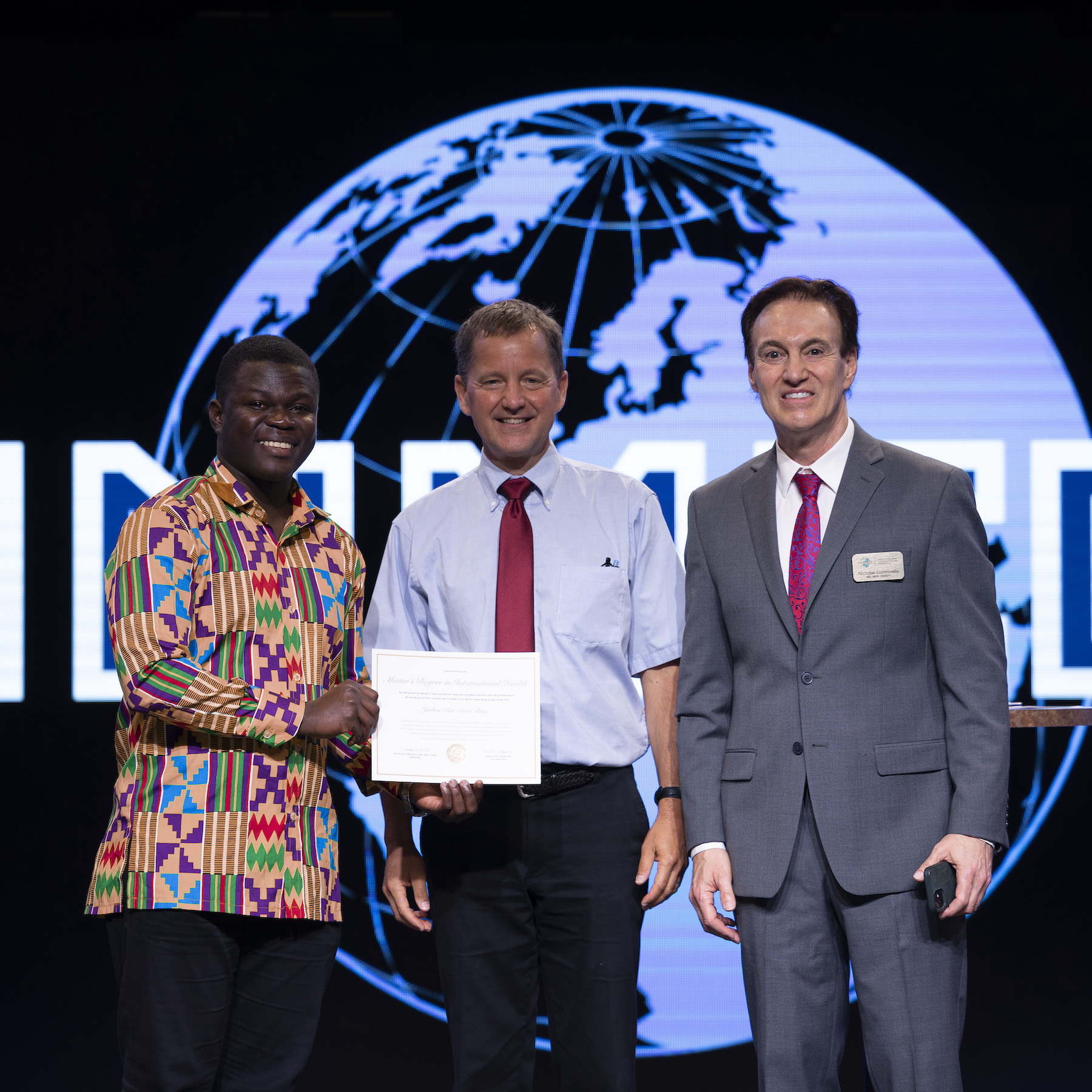
Cross-Cultural Healthcare AwardsLast week I was privileged to present the INMED Cross-Cultural Healthcare Awards at the annual Cross-Cultural Healthcare Symposium. The point of these awards is to recognize the heroes among us who both model and teach this virtue of service.

The INMED Cross-Cultural Leadership Award recognizes one who has made significant leadership contributions to bridging cultural gaps in healthcare services and has set an example for other leaders to emulate. The 2012 INMED Cross-Cultural Leadership Award recipient is Carla Gibson, nominated by Kansas City community directors in recognition of her leadership in reducing health disparities through increasing cross-cultural competency in the greater Kansas City Area. Her. Carla Gibson is the Program Officer for the REACH Foundation. Since 1991 she has proven her commitment to improving the health of the poor and underserved through her work at Charles Drew Health Center, Missouri Department of Health and Senior Services, Swope Health Services, and the Kansas City Free Health Clinic. In 2008, she introduced a Cultural Competency Initiative that aims to improve cultural competence in health services in the region with a long-term goal of eliminating health disparities. The initiative has provided nearly 20 health and human service organizations with technical assistance to improve their knowledge and skills in this field, and strengthen their services to diverse populations.

The INMED Cross-Cultural Service Award recognizes one who demonstrates care and concern for cultural diverse communities and who gives selflessly of time and resources for their benefit. The 2012 INMED Cross-Cultural Service Award recipient is Ran Poudel, nominated by and in recognition of his service to the Bhutanese Community in the Greater Kansas City Area. He was the one of the first Bhutanese refugees to arrive in KC, learning for himself all the difficult pathways that refugees must take. Fortunately, he was a school teacher and had some English skills. He joined Catholic Charities as a refugee community liaison, provided countless hours of volunteer service helping Bhutanese find jobs, get driver’s licenses, deal with family crises, and interact with US agencies. When asked whom they most trust to help them in a crisis, repeatedly Bhutanese people respond, “Ran Poudel”. He is constantly stepping into the gap to serve the community – an expression, he says, of the central tenets of his relationship with God.

What’s YOUR Story Of Compassion?

September 27th, 2012 Posted in INMED | No Comments »

What’s YOUR Story of Compassion?By what metric should we evaluate the effectiveness of healthcare among those who are poor? We could measure health data, like child mortality and life expectancy. We could also measure health knowledge or literacy – the degree to which people understand their medical conditions. But it is neither data nor knowledge that most compels action. Rather, it is accounts of humanity and heroism. Amber Griffioen, INMED student at Broadwell Christian Hospital in India, recounts:

“A poor, single, sixteen-year old girl from the Dalit caste (the lowest valued caste) came into my clinic with her parents. They were quite concerned because the girl hadn’t menstruated for three months. They were scared that no one would want to marry her if she wasn’t regular. It’s shameful for the families if they can’t marry off their daughters. We discovered that the daughter was pregnant – a cause of great shame for a family. The parents were adamant that the only option was to abort the baby.

“Dalit caste people like this girl are often mistreated and abused. She was so uneducated she may not even realize how she got pregnant. The female Indian doctor tried to convince them not to have an abortion. She offered for the daughter to come live in the dorm at Broadwell Christian Hospital and train to be a nurse’s assistant. The doctor would then help her to find a home for her baby.

“This act of love will prevent the baby’s life from being taken and prevent the family from being scorned by their community. Through this example of compassion I’ve learned that healthcare is not just about meeting the physical needs of a person, but rather their holistic needs. It’s not just providing a service, but rather solidarity with humanity.”

What’s your own story of compassion? What experience of rescue, care, or capacity building has inspired you? We invite you to share your accounts with us. Please post your story of compassion in action on the INMED Facebook Group or email your comments to office@inmed.us

By what metric should we evaluate the effectiveness of healthcare among those who are poor? Perhaps the most telling is the transformation that occurs within the hearts of people thus engaged. Observes Amber Griffioen, “My transforming experience in India with the Broadwell Christian Hospital team compels me to return. But this time I’m also committed to learning the Hindi language and to staying for at least a year.”