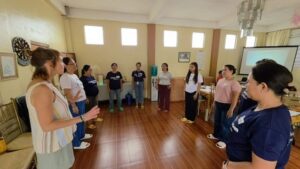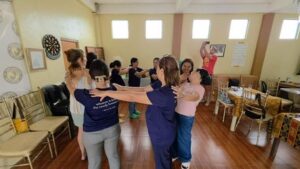
On July 8th, I had the privilege of teaching the first of two workshops to help improve outcomes for mothers and babies in low-resource areas.
In many places around the world, laboring mothers are not allowed to have a companion with them while they give birth. While this may seem like a sensible and normal thing everywhere, it is not. I have taken on the task of trying to improve maternal/newborn outcomes by teaching about the vital importance of a mother having her partner with her in labor. In teaching this, I aim to teach any healthcare workers present with women in labor how important it is for them to know and use comfort measures, kindness, and encouragement to support a laboring and birthing mother. In my teaching, I also cover how a healthcare worker can guide the woman’s companion in using these comfort measures.
There are years of compelling evidence showing that having a comfort companion or a healthcare worker trained to help the laboring mother feel safe and to provide comfort measures to cope with the natural pain of labor actually produces better outcomes for both the mother and the baby.
This is not the kind of thing you first think of when you think of helping to change the tide of the maternal/newborn crisis we have around the globe. You would probably think of the most urgent things, like having emergency skills to deal with a postpartum hemorrhage, understanding neonatal breathing problems at birth, and so on.
Those are so crucial in an emergency and in addressing the main causes of maternal/newborn deaths. But what is often neglected is understanding how we can prevent those things from happening in the first place. Having a labor comfort companion is one of them.
When a woman feels safe and cared for, her hormones work as they should, and labor has fewer complications. Oxytocin flows, causing labor to become stronger and faster, helping the baby to move down towards the birth canal.
She is more relaxed and is able to let her brain and body tell her it is safe to give birth. But if a woman has the opposite of these things-no companion to make her feel safe and loved, no comfort for the pain, and feels fearful, adrenaline and cortisol take over and lower oxytocin levels. This begins to slow and even stop the labor. This is where complications begin.
If we can start by having the skills of comfort, kindness, and making the woman feel secure, along with allowing her companion, who loves and cares for her, in the labor and birth room, we are working towards preventing complications. And then we see better outcomes for both the baby and the mother. The fact is that fear stops labor. A woman with her partner or a companion of her choice is more likely to have a healthy, normal labor and birth.
I was a certified doula (labor companion) for 11 years before I became a midwife. I have seen these very things I am telling you about.
And when you understand the overwhelming body of research showing this, it is hard to ignore. As a midwife pursuing a Master’s in International Public Health, this is what I want to see change in existing health systems. Allowing women to have the right to a companion
I created this workshop to teach Maternity Care workers the normal hormonal physiology of labor and birth, comfort measures, the crucial role of kindness and respect, and how to support companions in helping the mother.
My first teaching experience was great! It was actually very fun for me to teach and to receive feedback through attendee evaluations. We had wonderful feedback on how they would implement the teachings into their practice.
I will teach this workshop again in Olongapo on the Island of Luzon on July 13th.
Mercy in Action-sponsored birth clinics have always allowed a companion to be with the laboring woman, and our midwives are all trained to provide comfort and kindness. We are now working to provide evidence of why this should be happening in all places where births are happening.
Here are some photos from my teaching in Tanauan, Leyte: