One of the service-learning requirements for INMED is to provide on-site teaching in a relevant healthcare topic. I had anticipated needing to propose a training myself, but the clinic staff made my work easy. Shortly after my acceptance to the site, the providers at Bangkla Baptist Clinic asked if I could offer a Basic Life Support (BLS) refresher for the team.
By their estimation, most staff had last completed CPR training more than six years ago. In international settings, emergency medical services can be limited, and transport times can be long. Since seconds matter in resuscitation, it was a joy to provide hands-on skill training for the staff, but most importantly, the teaching created an opportunity for shared growth and meaningful collaboration.
With the help of the clinic’s nursing staff (who are trained to a level comparable to US-based CRNAs), we translated the most recent American Heart Association BLS for Healthcare Providers algorithm into Thai.
Together, we created pocket-sized reminder cards outlining the essential steps of BLS, ensuring that every staff member would have a practical tool to carry forward after the training ended.
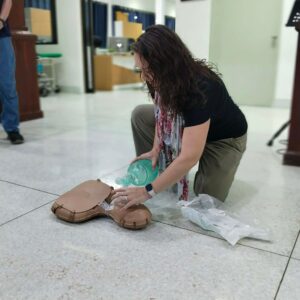
Over two mornings before clinic began, we trained in adult and pediatric CPR and choking response. The final session brought everything together through hands-on, team-based scenarios, allowing staff to practice responding in real-time. Laughter, focus, problem-solving, and encouragement filled the room, and I was pleased that the staff were eager to practice and refresh their skills.
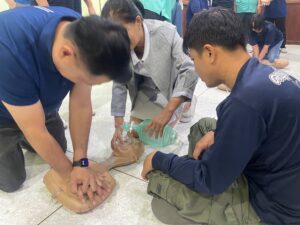
One of the most meaningful parts of the training was reinforcing a simple truth: regardless of resources, credentials, or setting, anyone can provide high-quality CPR when a person has no pulse. It was powerful to watch the staff recognize that what they were practicing is the same standard of care taught and expected in hospitals around the world. In regions where formal emergency response systems are still developing or still improving, this knowledge becomes even more significant. Skills learned in a clinic can translate directly into lives saved in homes, villages, and churches.
The staff’s response was overwhelmingly positive. Many expressed gratitude for the pocket cards with clear, simple steps to follow in case of an Emergency. And in a wonderful step toward sustainability, the clinic’s medical director decided that CPR refresher training will now be held annually for all staff.
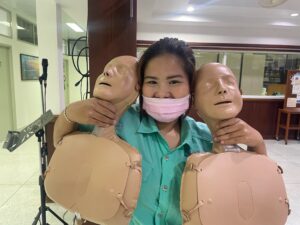
The Mini-Anne manikins I brought with me will remain at the clinic to continue supporting ongoing training. Beyond staff education, they could also be used in community outreach and church-based teaching, extending the impact of this work far beyond the clinic walls.
As I reflect on this experience, I am reminded that service-learning is never a one-way exchange. I came to learn and to teach, but the lessons that most blessed me were the collaboration, humility, creativity, and shared purpose with the staff serving here. This training was not simply about CPR. It was about equipping hands, building confidence, and strengthening a community’s capacity to care for one another.
And in that, I see the quiet, faithful work of God — multiplying what is offered, using ordinary tools to accomplish extraordinary good.