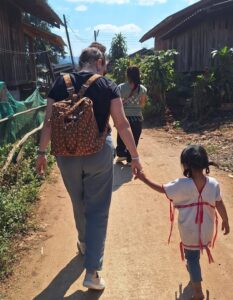
As I reflect on this service-learning experience, what stays with me most is not a single clinic day, lesson taught, or project completed — but the people. Their stories, their faith, and their generosity have shaped this journey in ways I will carry long after I leave.
One story, in particular, captures the heart of what I have witnessed here.
Kitty shared with me the story of her father and how he has become the man of faith he is today. She shared that her dad came from very little, and few expected much of his life as a result — especially his in-laws. But years ago, when his mother was gravely ill, he began seeking help wherever he could. He sought out traditional Karen healers. He went to the Buddhist temple. Nothing worked. Finally, in desperation, he approached a Christian and made a simple promise: “If you will pray for my mother and she is healed, I will give my life to God.”
Shortly after that prayer, his mother began to heal.
True to his word, he became the first person in Nong Tao to accept Christ. His wife followed, then a few others. What began with one prayer and one act of faith slowly grew. Today, in every village we visited, there is Christian leadership from men and women who desire to be a light in their communities and to use what they have learned to serve surrounding villages. The impact of that one decision continues to ripple outward.
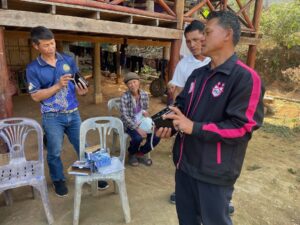
Kitty’s father attributes every opportunity, position, and accolade he has received not to his own ability, but to God’s blessing, and to the responsibility that comes with it. He has been asked to take on high-level civic roles, move to the big city to oversee larger groups of people, “move up the ladder,” but he has turned them down to continue serving his people, the Karen hill-tribe people in his village and the surrounding region. He speaks often of stewardship: of using what God has given him to bless others. His humility, consistency, and faithfulness are quietly powerful.
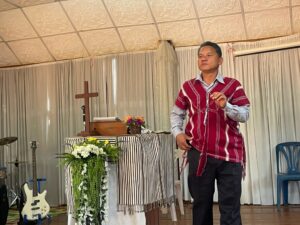
Ministry work, I know firsthand, can be lonely. Faithful obedience rarely comes with immediate recognition. And yet, as I leave this place, I do so deeply encouraged — reminded of the truth found in 2 Chronicles 16:9:
“For the eyes of the Lord range throughout the earth to strengthen those whose hearts are fully committed to Him.”
God is still seeking people who are faithful, who are willing to show up, to pray boldly, and to invest in their communities over the long term. Watching that lived out here has been profoundly inspiring, and it challenges me to ask how I might model that same faithfulness in the places I live, work, and serve.
Life in the village is not easy. It is marked by physical labor, limited resources, and uncertainty. And yet it is also simple, relationally rich, and deeply communal. There is time for conversation, for shared meals, for presence. There is dignity in knowing your neighbor and responsibility in belonging to one another. I am eager to see what continues to grow from the relationships formed here.
As I think back over this entire service-learning experience — the clinic work, the village assessments, the cultural immersion, the moments of rest, the lessons in humility — I am reminded of a proverb used in Community Development:
Go in search of your people. Love them. Learn from them. Plan with them. Serve them. Begin with what they have; build on what they know. But with the best of leaders, when the task is accomplished, the people all remark, “We have done it ourselves!”
True development, like true ministry, does not create dependence. It honors dignity, recognizes existing strengths, and walks alongside rather than ahead. This posture of listening, learning, and partnership has defined this journey far more than any task completed or box checked.
Service-learning is not about arriving as the expert. It is about arriving as the learner — with humility, curiosity, and trust that God is already at work long before we show up.
I leave this experience grateful. Grateful for the people who welcomed my family and me, grateful for the lessons learned in clinics, villages, and homes, and grateful for the reminder that one faithful prayer, offered in trust, can change not just a life — but a region.