
One of the central frameworks guiding my work during this service-learning experience is Community Health Evangelism (CHE), which we will call Community Health Empowerment. At its core, CHE is not a program imposed from outside, but a process rooted in asset-based community development and village transformation. Rather than beginning with what a community lacks, CHE starts by identifying strengths, resources, relationships, and leadership that already exist — and then builds from there.
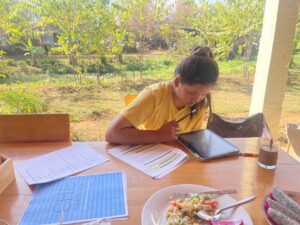
As an initial step in discerning whether a CHE-style project might be appropriate here, my scholarly project involves completing village health assessments and cultural learning in four Karen villages. These villages were thoughtfully selected by Kitty and her father, who serves both as a local pastor and a government social services leader. Their insight and trusted relationships within the community have been essential in opening doors and creating space for honest conversation.
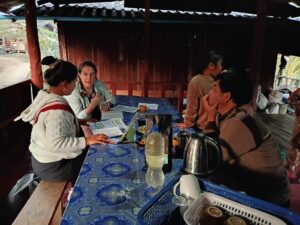
While a more in-depth analysis of the interviews is still to come (with the help of many who are assisting me in this project), I have already been struck by the openness, willingness, and enthusiasm of the people I have met. Community members were eager to talk with me, including village-elected officials, religious leaders, police officers, clinic workers, and existing health volunteers. They spoke candidly about both the strengths and struggles of their villages, and many shared a clear desire not only to be healthy and resilient communities themselves, but also to serve as a light and model for neighboring villages.
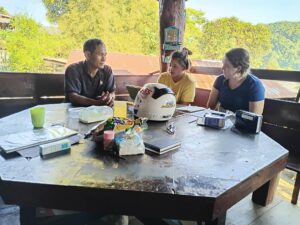
Despite government-provided health services in Thailand, there remains a shortage of rural healthcare workers — a challenge not unique to this region, but one seen even in the most industrialized nations. In rural Karen communities, this gap is felt acutely: a clinic run by 3 nurses serves 10 villages and oversees the health and wellness of about 10,000 people. At the same time, these villages possess strong social networks, deep cultural identity, and a shared commitment to community well-being, which are all essential foundations for sustainable development.
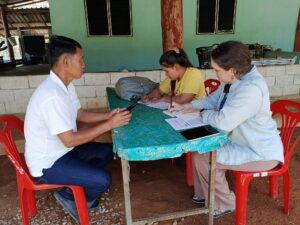
The Karen people face a complex tension as they move forward. Many long to retain their language, culture, and traditions, while also integrating into broader Thai society. This tension is often felt most strongly between generations. Older community members express concern about cultural loss with each passing generation, while younger people navigate a modern world shaped by Western influence, social media, and evolving ideas about identity, opportunity, and purpose. Holding space for both preservation and adaptation is not easy — but it is honest.
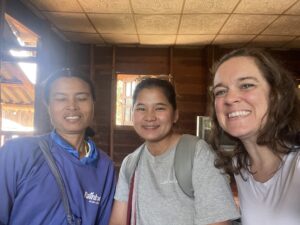
Sitting with community leaders and listening to their hopes and vision for the future of their villages was a profound privilege. These conversations were not abstract or theoretical; they were deeply practical, rooted in lived experience, and filled with both realism and hope. Again and again, I was reminded that transformation is most meaningful when it is locally imagined and locally led.
In the coming weeks, I look forward to carefully analyzing and framing the insights shared during these assessments. My hope is to present these findings to Kitty and other leaders within Bloom International (the organization that hosted us), to explore how this work might inform future community development initiatives. If CHE is to move forward, it will be because the community itself has expressed readiness, ownership, and vision.
This process has reinforced something I continue to learn: sustainable change does not begin with answers, but with listening. CHE invites us into a posture of humility, partnership, and trust, believing that communities already hold far more wisdom and capacity than we often assume.