
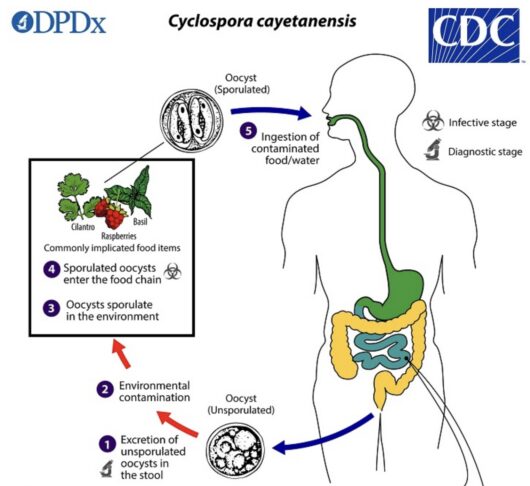
Across North America, thousands are becoming acutely ill with abdominal cramping, watery diarrhea, nausea, fatigue, weight loss – sometimes even fever, vomiting and dehydration. CDC, in fact, documents 11,500 cases across 41 states since May 2026. Expert investigation reveals we are becoming infected with a protozoan parasite, Cyclospora cayetanensis. Its cysts, eggs if you will, contaminate fresh produce like leafy greens, herbs, or berries. Once eaten, the microorganism emerges within our intestines causing the cyclosporiasis disease.
What is the risk you yourself will become infected and suffer cyclosporiasis? Factors that put you at risk include living in warm climate (especially in the summertime), being immunocompromised (such as from diabetes, kidney disease, or cancer), and eating fresh produce that has not been thoroughly cleansed. Beyond moving to a temperate climate and controlling chronic diseases, other important prevention measures include washing food with safe drinking water, peeling off the outer layers of lettuce, cooking fruits and vegetables to at least 158°F (70°C), and practicing good hand hygiene.
But we are not simply concerned for ourselves. We are also concerned for our communities. This disease is well-known and has been well controlled for decades, so why now? Why is the cyclosporiasis epidemic happening and what can we do to prevent the next one? Several factors play a role:
- Food harvesting and processing facilities are important. Inadequate sanitation systems, limited access to clean water, and poor hygiene all increase the likelihood of contamination. Increased attention to these processes – especially access to abundant clean water – can decrease the chance that food will be contaminated with Cyclospora. These standards are well documented in the Good Agricultural Practices (GAPs).
- Public health agencies also play a vital role in detecting and controlling cyclosporiasis through testing produce for contamination, disease surveillance of sickened people, laboratory testing to verify infection, outbreak investigations, and food trace-back efforts. These vital agencies identify contamination sources, issue public health alerts and food recalls, educate healthcare providers and the public, and collaborate with agricultural and food industries to strengthen food safety and prevent future outbreaks.
- Healthcare professionals do well to be very aware of current epidemics, and to update their knowledge. This is especially true for those of us in emergency medicine and primary care. Medical information is constantly improving, and the ready availability of excellent apps makes the process of polishing our skills well within reach.INMED offers a Communicable Disease Control course to advance your skills in this dynamic field.
- Consumers also have an important role in prevention. We should all purchase produce from reputable suppliers, and follow food safety advisories, including peeling, boiling, and hand hygiene.
Will cyclosporiasis infect you? Perhaps not. But preventing the next outbreak requires vigilance from all of us. The question should prompt us to rethink how we control food-borne communicable diseases—from sanitary food production and public health surveillance to the well-washed lettuce on a summer hamburger.