
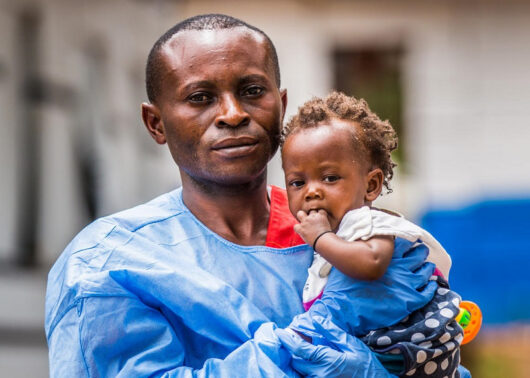
 Today’s Ebola outbreak in central Africa raises an urgent question: What is our responsibility towards people at risk from this disease? For many people in North America, the temptation is to view the crisis as distant and irrelevant. Such a perspective is understandable and also shortsighted.
Ebola is one of the deadliest known infectious diseases, causing severe fever, vomiting, internal bleeding, and death in roughly half of people infected. Although Ebola is not transmitted through casual airborne contact like influenza, it is highly contagious through direct contact with infected bodily fluids. So far in this Spring 2026 epidemic, about 500 people have become infected and 100 people have died – though reliable statistics are difficult to acquire given the civil and military conflict that plagues this region. INMED Graduate, Dr. Lucio Victor, today continues serving in Congo to care for these precious people.
The Covid-19 epidemic reminds us that contagious diseases do not respect national borders. With international travel and trade, a local epidemic can quickly become global. In regions with limited healthcare infrastructure – like central Africa – outbreaks can spread extremely rapidly, overwhelming hospitals and devastating families and communities. If today’s Ebola crisis grows beyond the ability of local and international authorities to contain it, the consequences could extend far beyond Africa.
Beyond these concerns is also a profound moral responsibility to care for those who suffer. In Matthew Chapter 25, Jesus teaches that acts of compassion toward the vulnerable are acts of service to Him. He declares, “I was hungry and you gave me something to eat, I was thirsty and you gave me something to drink, I was sick and you looked after me” (Matthew 25:35–36). Christ identifies with those in need and calls His followers to respond with mercy and generosity. The Ebola crisis presents a clear opportunity to put these teachings into action – even in spite of personal risk. Dr. Victor explains, “One American missionary doctor here just contracted Ebola and was evacuated last night. I hope and pray he will recover, and his wife and children will be safe from infection.”
Rather than turning away because the suffering seems far from our homes, we should empathize with those affected by supporting relief organizations, interceding for healthcare workers, advocating for international assistance, and promoting awareness. Compassion does not stop at national borders, and today’s people suffering from Ebola are indeed our neighbors.
Today’s Ebola outbreak in central Africa challenges us to reject indifference and embrace responsibility. Whether motivated by concern for national health, global health, or by Christ’s command to care for the sick, we should be responding with compassion, action, and solidarity.