Itunda Baptist Mission - Angola Day 7

June 30th, 2010 Posted in 2010 Angola | No Comments »

Itunda Baptist Mission, Huambo, AngolaIn contrast to the behavior of Angola’s colonial rulers, some individuals made genuine investments into the lives of the Angolan people themselves. In 1929 a family moved to the village of Itunda, just outside the city of Huambo (formerly Nova Lisboa). They started a school for local children, taught about Jesus, and initiated a church. In this photo is Caesar Sapolo, Angolan nurse, and myself in front of the marker for the Itunda Baptist Mission. The founders would no doubt be thrilled to know that decades later Caesar and I held many clinics on this piece of land they dedicated on behalf of Angola’s native people!

We Will Now Take Your Question - Angola Day 5

June 30th, 2010 Posted in 2010 Angola | No Comments »

Angola Public Radio AppearanceAngola was colonized by the Portuguese during the 1400s. Though the Portuguese invested little into Angola’s infrastructure, even after the colonial rule ended in 1975 the Portuguese language remains both the official and the common language. I was quite privileged to live in Lisbon for a year studying the language. One of the language highlights of my life was the first time I even gave a message at church in Lisbon. Another was last night, when Steve Foster (left), Iria Almeirão (center), Sozinho (right) and I appeared on Angolan National Radio. The theme of the night was malaria - one of the leading causes of death and disability. Later in the program we started taking phone calls. One guy called in and asked, “I have heart burn every time I drink a Coke. Could this be due to malaria?” At first I thought I misunderstood his language. Then I concluded that he was indeed serious!

This Child Should Never Have Died! - Angola Day 3

June 29th, 2010 Posted in 2010 Angola | No Comments »

Nigombe With PneumoniaDirectly from the airport in Angola I drove to the Lubango Evangelical Medical Center and made hospital rounds. Almost immediately I was summoned to the ER, where I met little Nibombe. Coughing and less than alert, it was clear that Nibombe was suffering from pneumonia that encased his entire left lung. On closer inspection, I was also alarmed to find that his condition was complicated by heart failure. I treated him with ampicillin IV, which is about the only highly active antibiotic we have at the med center, as well as furosemide for his cardiac insufficiency. Nibombe initially improved and I was feeling such relief. What a sad encounter the following morning to discover that Nigombe died suddenly during the night. Working out here, we face so very many unknowns. Unknown languages. Unknown behaviors. Unknown diseases. I keep thinking of what else from which this kid may have been suffering that I totally missed.

Cross-Cultural Shock - Angola Day 1

June 29th, 2010 Posted in 2010 Angola | No Comments »

Angola MarketStraight after reception for the INMED Intensive Course students I left for the Kansas City International airport. Three days and some 14,000 miles later I landed back in Lubango, Angola, southern Africa. This nation is noteworthy for being home to the shortest life expectancy on earth - just 38 years! Though I lived in Angola for two years straight and come back for at least a month each year, I still feel such shock re-entering the nation. Shock from language (only Portuguese and tribal languages spoken here), from unusual diseases (malaria, HIV, typhoid fever), from new professional demands (rounding each day on 45 hospital patients), and shock from a culture that is both familiar and still quite foreign to me.

2010 INMED International Public Health Intensive Course

June 28th, 2010 Posted in INMED | No Comments »

2010 INMED International Public Health Intensive Course ParticipantsThe week of June 14-18 INMED hosted 69 participants for the 2010 International Public Health Intensive Course. These included nurses, public health specialists, pharmacists, physicians, and graduate students from the entire range of health fields. Remarkably, most participants had significant international experience caring for those most poor. Topics included Health Leadership, Building Organizational Capacity, Water & Community Development, Cultural Adaptation, Ethical Issues, Health & Poverty, Community Health Assessment, and Disaster Medicine Management. Look for these graduates in the photo above to be among tomorrow’s leaders in international health!

2010 INMED International Medicine Intensive Course Participants

June 13th, 2010 Posted in INMED | No Comments »

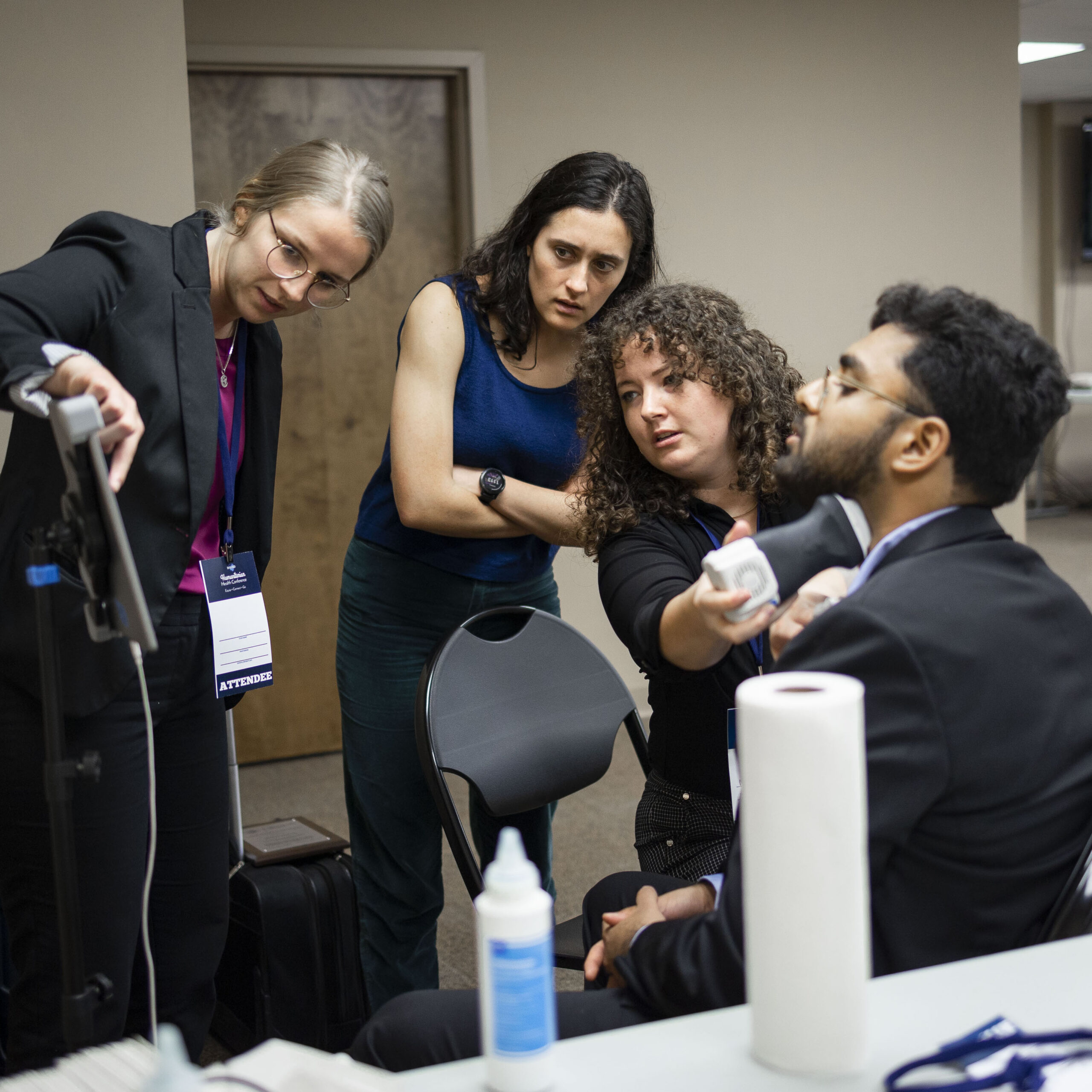
2010 INMED International Medicine Intensive Course ParticipantsOn June 7 INMED welcomed 43 participant to the University of Missouri-Kansas City for the 2010 International Medicine Intensive Course. Many of these highly motivated individuals have significant experience in serving forgotten people in multiple nations, and came to further sharpen their skills. Participants included 13 physicians, 2 resident physicians, 7 medical students, 7 physician assistants, 7 nurse practitioners, 1 pharmacists, 3 pharmacy students, and 1 CRNA. They received presentations from 18 acclaimed faculty, and engaged in skill stations to develop technical facility with ultrasound, casting and optical refraction. Best of all, most participants expressed the encouragement they experienced through learning alongside like-hearted colleagues.

How Important Are The Big Three Infections - Really?

May 29th, 2010 Posted in INMED | No Comments »

poverty.jpgQuick, what is the leading acute cause of death in world’s poorest nations? How about the second most common acute cause of death? The truth may startle you. Pneumonia as the leading acute cause of death is no surprise. But number two is coronary artery disease. No, not HIV, not tuberculosis, not even malaria. It is simply arterial athersclerosis. And least you believe this an outlier, consider the fact that stroke – another manifestation of athersclerosis – is the fifth leading acute cause of death in the poorest nations. Such straightforward epidemiology challenges one of the most popular misconceptions in the field of global health: the notion that infectious diseases – particularly the Big Three: tuberculosis, malaria and HIV – are the greatest plagues afflicting the world’s most vulnerable peoples. The fact of the matter, conversely, is that non-infectious, chronic maladies severely burden those living in extreme poverty, and that such maladies worsentheir poverty through both health care costs and lost wages connected with lost work. What effective steps are we taking against chronic diseases?

2010 Exploring Medical Missions Conference!

May 22nd, 2010 Posted in INMED | No Comments »

emmc.JPGThis weekend INMED enjoyed the company of some 450 students and practicing healthcare professionals at the 5th Exploring Medical Missions Conference. Complementing these participants were representatives of 35 sending organization - recruiting volunteers for service opportunities among the most neglected citizens of our world. I’m particularly touched by presence of some very many “heroes in healthcare” - Angie & Mark Byler serving in Zimbabwe, George & Elizabeth Faile just retired from 20 years in Ghana, Judy & Joe LeMaster giving their lives for 10 years in Nepal. And most excited of all, the younger people who caught a vision for following the noble, godly passions of these model individuals!

Can You Identify This Disease?

May 9th, 2010 Posted in INMED | No Comments »

cutaneous_leishmaniasis.jpgThis child lives in South America in a region home to sand flies and mosquitoes. For the last year he’s suffered from intermittent fevers, weight loss, and cough. His stools have been loose and foul smelling. His family reports that this lesion on his cheek ulcerates, heal spontaneously, and ulcerates again. From which disease of poverty is he suffering??? One of the ‘classic’ tropical diseases: cutaneous leshmaniasis. Disease manifestations include skin or mucocutaneous disease or visceral disease (kala-azar). WHO estimated global burden from this disease at 2.4 million life years lost and 59,000 deaths for 2001. Pentavalent antimonials, such as sodium stibogluconate and meglumine antimoniate, are used for treatment of visceral and cutaneous disease. Prevention and control measures include using pesticides against sand flies, permethrin-coated fine netting and measure to eliminate leishmaniasis in dogs.

What Caused This Deformity?

April 29th, 2010 Posted in INMED | 1 Comment »

leprosy.jpgHere are some hints… This disease is considered a ‘classic’ in tropical medicine. It’s generally considered to be highly contagious, but really is not. Control of the disease has improved in recent years, though many people are still suffering from the permanent disability that it brings. Enough hints? This deformity is caused by leprosy. Caused by a very slow growing organism, similar to tuberculosis, a person with leprosy generally must live in close contact with other before they acquire the disease themselves. Leprosy causes damage to skin. But more importantly, it also leads to destruction of peripheral nerves - rendering people without pain sensation. In the case of the woman in this photo, small infected cuts and burns to the fingers and hands over a period of years eventually caused necrosis of all her fingers.